Follow the money through a mine's water treatment budget and the biggest costs turn out to hide in sludge, logistics and time.
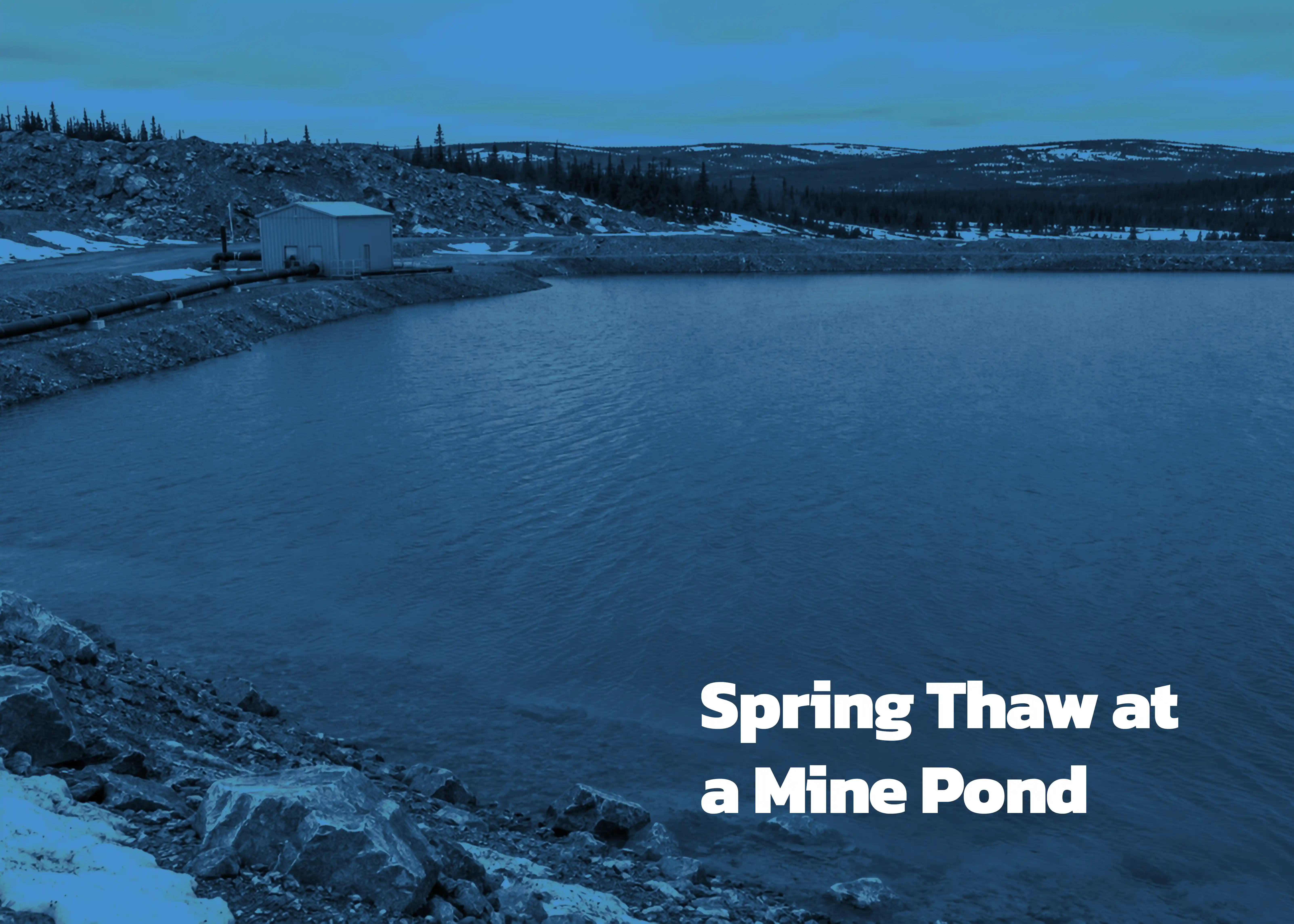
Every spring, somewhere in northern Canada, a mine pond starts to fill. Snowmelt runs over waste rock and tailings, picking up acidity and dissolved metals that must come out before the water returns to a river. Sooner or later, someone has to ask what that costs.
The honest answer is a range so wide it's almost a punchline. When CanmetMINING surveyed more than 100 treatment sites for Canada's MEND program, the average came to $1.54 per cubic metre, but systems cost anywhere from $20,000 to $42 million. The figures are old, but the spread is the lesson: cost depends less on the plant than on the site. So rather than chase one number, take a budget apart, line by line.
The chemistry sets the bill
Mine water treatment is, at heart, an industrial-scale titration: add an alkaline reagent, raise the pH, and metals drop out as solids. More acid and metal means more reagent.
Lime is the industry's default because it delivers neutralizing power cheaply. But price per tonne is misleading. Lime-based high-density sludge plants typically use only 60% to 70% of the reagent they add. The rest ends up in the waste. Cold makes it worse: research by lime producer Carmeuse found that colder slaking water lowers how efficiently quicklime is used, an awkward fact where winter lasts half the year.
Overdosing carries its own penalty. Lime and caustic soda can push water past pH 12, while magnesium hydroxide levels off near pH 9.5, a far wider margin for error.
Then there's the contaminant itself. As SRK's Andrea Bowie told Canadian Mining Journal, "chemistry often drives cost." Lime handles acidic, metal-laden water well; selenium needs complex biological treatment. A Wildsight-commissioned estimate put 60 years of Teck's planned selenium treatment in BC's Elk Valley at $6.4 billion, a figure Teck disputes.
The cost nobody budgets: sludge
Every kilogram of metal removed leaves something else to manage. Conventional lime treatment produces sludge that's only 1% to 3% solids, so most of what operators store, dredge and haul is water. In sulphate-rich mine water, lime also forms gypsum, which adds bulk and scales pipes.
The US Office of Surface Mining's AMDTreat cost model warns that sludge is often overlooked in treatment estimates. It's also one of the most improvable costs. Raising sludge density from 2% to 30% solids cuts its volume by more than 95%. Every cubic metre that's never created never has to be moved.
Moving water, and moving people
Conventional treatment takes the water to the plant, which means pumps, pipelines and power sized for the wettest week, when peak flows can reach four times the average.
People are the next cost. At remote northern sites, operators, reagents and spare parts arrive by long road, barge or air, and winter brings storms, delays and safety risk. Compliance adds a steady workload: under Canada's Metal and Diamond Mining Effluent Regulations, mines sample each discharge point weekly and test effluent monthly for toxicity to rainbow trout and the water flea Daphnia magna. A failed test means more testing, and dilution isn't allowed.
The longest line item: time
Most of these costs repeat yearly, and many mines expect to treat in perpetuity. AMDTreat's developers note that annual operating costs largely determine a system's long-term cost, so a small yearly saving becomes a large one over decades. The public purse feels this too: Yukon's 2025–26 budget set aside $5.5 million for just the first year of water treatment at the closed Wolverine Mine.
Where the savings actually live
The most reliable way to reduce water treatment costs in mining isn't a cheaper supplier. It's better process design.
That means testing the actual water at bench scale so doses are measured rather than guessed, choosing reagents on whole-life cost, and designing out sludge before it forms. Above all, it means asking whether the water needs to travel at all. At the Copper Basin site in Tennessee, an in-pit lime system that used an old open pit as its settling pond cost just 15% of an equivalent conventional plant. At northern sites, letting water collect over winter and treating it in summer cuts cost and access risk alike.
That thinking shapes PMAP's Engineering Solutions work, which moves from technology evaluation and lab testing to process design and facility optimization, drawing on 22 projects in 10 countries. It also underpins PMAP's in-pond treatment, where unmanned vessels map the pond and dispense magnesium-based reagents where they're needed, either on their own or ahead of an existing lime plant. Compared with traditional lime systems, PMAP's figures show up to 85% lower capital cost and up to 30% lower operating cost, depending on the site.
Editor's note: Add a link and a one-line summary of the Hudbay Flin Flon project here once the case study is published.
The water will keep coming every spring. The cost doesn't have to keep climbing with it. Get your mine water assessment to find out which of your cost lines can move.